Global & Insight
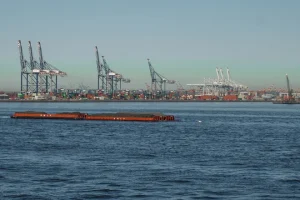
U.S. Trade Policy Shake‑Up in 2026: Section 301 Investigations, China Response, and Global Market Impact
As geopolitical tensions escalate in the Middle East and global energy prices remain volatile, Washington is moving swiftly on trade policy. On March 11, 2026, the Office of the United States Trade Representative (USTR) announced the initiation of comprehensive trade investigations under Section 301
 2026-03-12

Strait of Hormuz Crisis 2026: Global Energy, Shipping, and Supply Chains at Risk
In the early hours of February 28, when the United States and Israel launched a coordinated military campaign against Iran, the first shock was military. The second shock was economic. And the third—still unfolding—is structural. Within days, traffic through the Strait of Hormuz slowed to a near st
2026-03-10

If Iran Lost Its Supreme Leader: Power Vacuums, War, and the Future of the Islamic Republic
For more than three decades, the Islamic Republic of Iran has revolved around a single gravitational center: Ali Khamenei. His authority was not merely constitutional or clerical. It was personal, accumulated through survival, repression, and the slow consolidation of parallel institutions designed
2026-03-03

America’s De-Risking Paradox and the Slow Collapse of Global Order
The U.S. Supreme Court’s ruling that the administration’s reciprocal tariff framework exceeded its legal authority should have marked a decisive reaffirmation of institutional restraint. In theory, it was a moment when the rule of law reasserted itself over executive improvisation. In practice, it a
2026-02-28
China’s LGFV Debt Reckoning: Why the Hard Part Starts After Hidden Debt
China’s LGFV Debt Reckoning Has Moved Past the Easy Part As 2026 unfolds, China’s local government debt resolution campaign is entering a far more delicate phase. The market’s attention is no longer on whether Beijing can clear hidden debt on schedule—it almost certainly can—but on whether the opera
2026-02-25

Can Sanae Takaichi Transform Japan’s Economy?
Japan held a general election for the House of Representatives in the depths of winter. The Liberal Democratic Party (LDP), led by Prime Minister Sanae Takaichi, together with its ally the Japan Innovation Party, secured an overwhelming victory. The result not only restores the LDP’s dominant contro
2026-02-10

Kevin Warsh, Trump, and the Fed’s Independence Crisis
Donald Trump’s decision to nominate Kevin Warsh as the next Chairman of the Federal Reserve is not merely a personnel choice. It is a referendum on the postwar monetary order itself. Warsh’s nomination, still subject to Senate confirmation, arrives amid extraordinary institutional turbulence. The De
2026-02-09
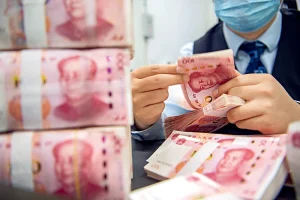
China’s 2026 Monetary Policy: Structural Easing, Fiscal Power
China has confirmed that it will maintain a moderately loose monetary policy throughout 2026. As the new year unfolds, markets are no longer debating whether easing will continue, but how it will be delivered—and how far policymakers are prepared to go. Early signals suggest a familiar but refined a
2026-02-06
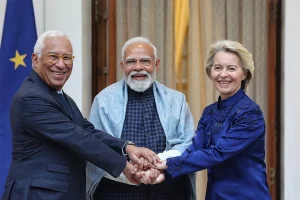
India-EU FTA 2026: A Landmark Deal for “Rules-Based” Market Access
On January 27, India and the European Union announced the conclusion and successful consensus of their Free Trade Agreement (FTA) negotiations. This marks the end of a marathon negotiation process that spanned nearly 20 years. According to data disclosed by both parties, once implemented, the trade
2026-02-02
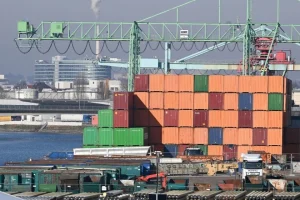
Germany Is Growing Again—but the Economy Is Still Stuck
Germany’s economy technically returned to growth in 2025, expanding by just 0.2% after two years of contraction. But the number disguises more than it reveals. Rather than marking the start of a recovery, the uptick reflects a fragile pause—one that leaves Germany’s deeper structural weaknesses firm
2026-01-29